The migration crisis is only the latest issue threatening to blow the European Union asunder. From “Brexit” to “Grexit,” countries are shunning the benefits of economic integration to reclaim full political sovereignty.
Many Europeans yearn for the days when the EU primarily functioned as a trading bloc. Even German and Hungarian Europhiles are joining British and Greek Eurosceptics in ruing the day they delegated so much sovereignty to EU institutions in Brussels.
One can hardly blame them. There’s scarcely an area of life in which the EU does not exercise some decision-making power.
Many in Europe don’t want the EU to get any closer.
They feel EU bureaucracy already invades their personal – and national sovereign – space too much.
(BBC, March 3, 2015)
The above provides an instructive contrast with what is happening in the Caribbean. After all, even newly independent countries in Europe are trying to clawback sovereignty in every respect. But newly independent countries in the Caribbean are steadfastly refusing to claim it, notably in one very material respect.
Colonial dependence
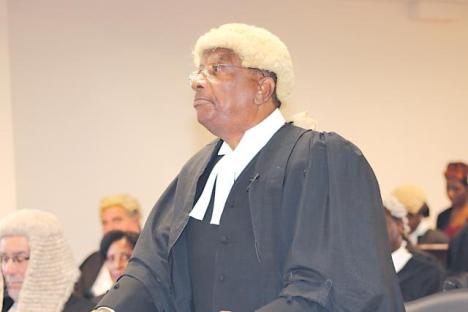 Specifically, an eminent jurist stirred a furor last week when he decried this willful clinging to colonial dependence as it pertains to The Bahamas, the country of my birth.
Retired Justice Neville Smith QC, said on Thursday the country should not allow itself to become a ‘hostage’ to the Privy Council and recommended that The Bahamas set up its own final court of appeal rather than continue to ‘perch’ on the British government’s doorstep… ‘Who knows when the British government, bent on the restructuring of its courts … will do away with the Privy Council that it created by an 1844 English act,’ said Smith at a special sitting at the Court of Appeal to mark the opening of the legal year.
‘Should we not set up our own final court in our own deliberate time rather that to continue to perch on the doorstep of the foreign office in London or wait to be embarrassed by the British government doing away with the Privy Council and cause us here to run … to make up a replacement court?’
(Nassau Guardian, January 29, 2016)
The answer, of course, is: Yes we should! A final court of appeal composed entirely of foreign judges makes a blatant mockery of any country’s claim of independence.
I’ve written extensively about this idle-minded debate on the Privy Council, pleading our case to no avail. As I’ve argued before, we must take care of our own judicial mess rather than rely on colonial institutions.
The Caribbean Court of Justice alternative?
The Caribbean Court of Justice (CCJ) was established in 2001 to replace the Privy Council as our final court of appeal. This codified the natural desire of CARICOM’s newly independent member states to cut the final umbilical cord of British colonialism.
 It is stupefying that only two countries (Barbados and Guyana) have actually severed this cord and embraced untethered independence. Given that enlightened Jamaicans proposed this liberating cut as early as 1970, the fact that even they have not followed through reflects an habitual suckling on the colonial tit that is as judicially infantile as it is politically hypocritical.
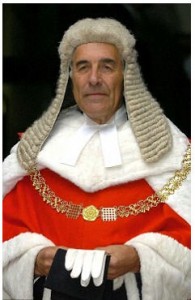 We now face the humiliating spectacle of Lord Nicholas Phillips, president of the Supreme Court of the United Kingdom, giving us a public spanking for failing to assume ultimate responsibility for our own judicial affairs.
In a September 2009 Financial Times interview, Lord Phillips complained that the five British judges who sit on the Privy Council spend 40 percent of their time adjudicating cases from the former colonies. He indicated he wished these now-independent countries would stop using the Privy Council and set up their own final courts of appeal instead.
You’d think Lord Phillips’s admonition would chasten any self-respecting Caribbean leader. And, that this in turn would compel that leader to relieve Britain of this ‘white man’s burden,’ which is plainly anachronistic, untenable, and unfair. Not to mention that Lord Phillips is only admonishing Caribbean leaders to do what they have known for nearly 40 years they should, indeed must, do.
Yet it will take far more than paternal rebukes to get our leaders to do the right thing. Nothing demonstrates this quite like the clueless and hopelessly solicitous reaction of The Bahamas’ then-deputy prime minister and attorney general, Hon. Brent Symonette, who suggested merely limiting the number of appeals rather than abolishing the system entirely.
The Path Forward
The CCJ is not the only real alternative. The jingoistic politics that have made CARICOM such a dysfunctional laughing stock actually militate against member states turning to this regional court as a replacement for the Privy Council.
The only viable alternative may be for each CARICOM country to simply establish its own Supreme Court. This would be an ironic default outcome; after all, a judiciary with a final court of appeal at its apex is a hallmark of any independent nation.
It is immature, irresponsible and, frankly, niggardly for Caribbean leaders to have relied all these years on our former colonial master to fulfill this essential function of our national self-determination.
Incidentally, the Privy Council ruled in March 2006 that the death penalty is unconstitutional. This ruling exposed the impudent absurdity of our umbilical dependence.
Bahamian politicians reacted merely by decrying the neocolonial fiat of the British judges who handed it down. You’d think their indignation would have compelled them to wrest final appeal from those judges and vest it in Bahamian judges. But it appears this did not even occur to them.
 On the contrary, many Caribbean leaders argue that the Privy Council serves as an indispensable guardian of judicial competence and confidence for foreign investors. They seem inured to the fact that this argument perpetuates the very colonial stereotypes independence was supposed to relegate to the dustbin of history.
No insult to national sovereignty or pride seems sufficient to cause them to abolish this instrument of British colonialism.
Other Colonial Vestiges Must Go
I’ve also pleaded for the Caribbean to get rid of other customs and practices that are nothing more than vestiges of colonialism. As I’ve argued about the need to abolish the British honours system, we must stop perpetuating slavish devotion to royal pretensions.
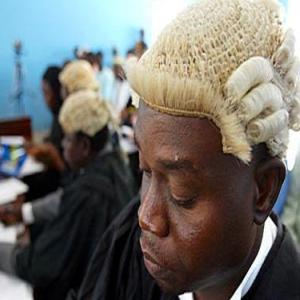 I’ve also made the case for why Caribbean lawyers should stop wearing white wigs. These legal accoutrements are more suited to the stuffy, dank, and frigid climes of the British Isles, not the liberating tropical weather of the Caribbean. Blue-blooded British lawyers might find the itchy discomfort wigs of horsehair inflict perfectly amenable to their sadomasochistic nature. But we red-blooded Caribbean lawyers wear them under duress, as prickly and unsightly wigs of thorns.
Not to mention the sweat this quaint, effete, and anachronistic attire produces, which poses a formidable challenge even to the most fragrant antiperspirant.
iPINIONS welcomes Smith, as well as other judges emeriti, to this liberating cause of ridding the Caribbean of the Privy Council. But I hope they see the manifest necessity of ridding our profession of the equally unsuitable wigs and gowns too.
At long last CARICOM Heads, have you no self-respect?!

Legacy Note: With over 5,600 posts spanning 20 years, I am easily the most prolific blogger on the most eclectic array of topics on the web. That makes The iPINIONS Journal an unparalleled archive of informed political and cultural commentary. Visit the ARCHIVES section in the sidebar or search by topic. You won’t find a more consistent, independent voice on world affairs.