 Traditional golf fans got their panties in a twist yesterday because I suggested that golf’s popularity surge had more to do with Tiger Woods than the game itself. The truth hurts, but the data doesn’t lie.
The Tiger effect vs. country club snobbery
I’ve been getting under the skin of golf purists for years. Our mutually assured ribbing began when they dismissed my passion for IndyCar racing and female drivers making history.
My response was characteristically blunt: while they watch “pot-bellied men club and chase a little ball over manicured lawns,” I prefer watching drivers with the steady hands of surgeons navigate 220 mph speeds for 500 miles. That’s real athletic drama.
A few years later, I made my position on golf crystal clear during the US Open coverage: “I don’t mind admitting that, if Tiger Woods is not playing, I’d rather watch paint dry than watch professional Golf.”
This wasn’t hyperbole; it was an honest assessment of the role Tiger plays in making golf must-see TV for mainstream audiences.
The numbers don’t lie
Fortunately, I no longer have to conjure up ways to disabuse my golf-loving detractors of their presumptions about the popularity of their game. For here’s what CNBC’s Sport Business reported yesterday, seemingly endorsing my diss about golf without Tiger being just a country-club game (i.e., not even a proper sport):
Often cited for the game’s drop-off are the costs of playing, the time it takes, the perception that it’s a game for snobs and modern distractions such as sitting in front of a computer. But if there’s one major reason for shrinking interest by Americans in golf, it pretty much starts and ends with the success and ultimate hard times of one player.
‘Tiger Woods changed the game and interest in it,’ said Pat Rishe, professor of sports economics at Webster University.
The correlation between Tiger’s performance and golf’s TV ratings has been undeniable for years. More importantly, this correlation has been declining for almost five years, ever since Tiger’s personal troubles began affecting his professional game.
The Majors tell the story
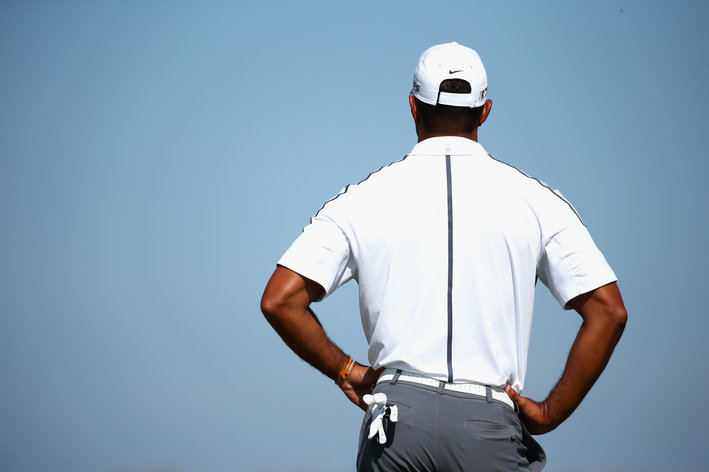 Tiger’s dominance was so complete that his absence created a vacuum. As I detailed in my analysis of Tiger’s losing fight, the last 13 major championships were won by 13 different players. No one has emerged to fill Tiger’s shoes, and the viewing public has noticed.
Recent British Open coverage proved this point dramatically. SB Nation reported that despite Rory McIlroy’s impressive victory, viewership declined 26% and 25% respectively from the previous year, representing the second-lowest figures since 1981. Why? Tiger was never in contention.
Rory McIlroy may be the next coming of Tiger Woods inside the ropes but the newly crowned British Open champion has a way to go before he wins over viewers slouched on their couches with TV remotes in their hands.
The uncomfortable truth
 Traditional fans may choose to ignore it, but golf without Tiger is like any other niche sport struggling for mainstream relevance. As I wrote in the Masters without Tiger, the game needs its transcendent star, not just skilled technicians playing for country club audiences.
But Tiger is 35 and probably has five more years of competitive golf ahead of him. If he doesn’t win his 15th major soon, he may never dethrone Jack Nicklaus as the king of majors with 18 wins. More importantly for golf’s future, the sport may never again capture the mainstream attention it enjoyed during Tiger’s prime.
Frankly, if Tiger continues his recent struggles, I’ll return to dismissing golf as nothing more than a lily-white, country-club game unworthy of television coverage. The only exception might be if his 23-year-old niece, Cheyenne Woods, begins revolutionizing the women’s game the way Tiger did for men’s golf in 1997. But that’s probably expecting too much.
The bottom line remains unchanged: golf is more about Tiger than the game itself.

Legacy Note: With over 5,600 posts spanning 20 years, I am easily the most prolific blogger on the most eclectic array of topics on the web. That makes The iPINIONS Journal an unparalleled archive of informed political and cultural commentary. Visit the ARCHIVES section in the sidebar or search by topic. You won’t find a more consistent, independent voice on world affairs.