I am a despairing anti-monarchist. This is why I was so encouraged yesterday when Australian Prime Minister Malcolm Turnbull explained his government’s decision to ban Queen’s Honours as follows:
This reflects modern Australia. The knights and dames are titles that are really anachronistic; they’re out of date; they’re not appropriate in 2015 in Australia.
(BBC, November 2, 2015)
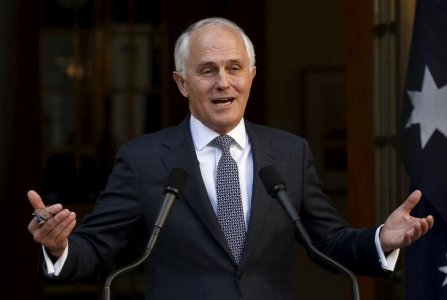 Turnbull made no effort to disguise his republican disdain for royal practices and pretensions. Indeed, one got the sense that his tone and countenance would have been the same if he were announcing a ban on the frivolous etiquette of curtseying to members of the British royal family.
Of course, I not only share his disdain; I’ve been pouring scorn on British royalty and its “gold-plated scroungers” for years.
I’ve maintained that royalty is anathema to the principle that all people are created equal, making any democracy that institutionalizes monarchy in the twenty-first century as cancerous as those that institutionalized slavery in the nineteenth. Further, that Commonwealth countries make a mockery of their independence by retaining Queen Elizabeth II as head of state and allowing their citizens to covet British honours as eagerly as British commoners do.
I despair because I have yet to meet a fellow native of any former British colony who shares my antipathy to monarchy. Admittedly, there’s probably something Freudian in my antipathy, stemming from the childhood trauma of having my English teacher in The Bahamas disabuse me of my pining to learn French (creole). I remember well her admonishing the entire class that, “You belong to England, not France;” and that was that.
Incidentally, I developed this pining after hearing a Haitian family friend speak “broken” French, which sounded far more interesting, even to my adolescent ears, than the “proper” English she was teaching us.
 Still, I trust my Freudian trauma is more sympathetic than the Stockholm Syndrome that afflicts so many of my compatriots.
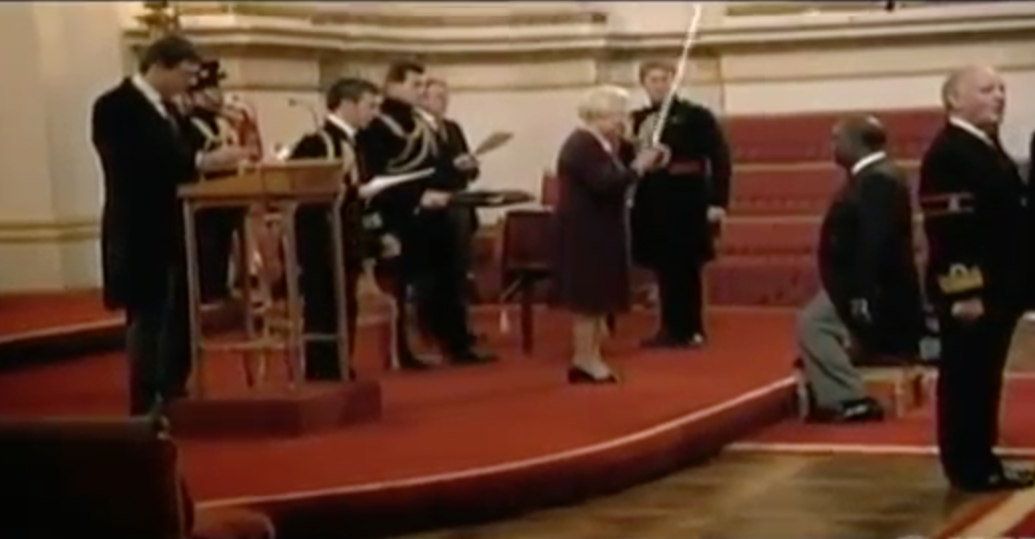
For only this syndrome explains no less a person than Lynden O. Pindling, the founding father who led The Bahamas to independence in 1973, proudly kneeling before the queen in 1983 to be knighted with the apocryphal words, “Arise, Sir Lynden!”
Beyond honours, I’ve long pleaded for Caribbean judiciaries to abolish the anachronistic British wigs and gowns that are wholly unsuited for the tropical weather, forcing lawyers to endure prickly horsehair wigs that challenge even the most fragrant antiperspirant.
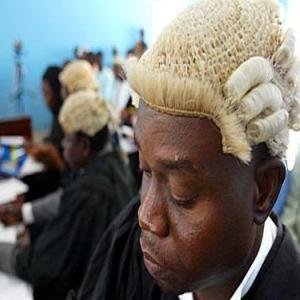
And beyond wigs and gowns, iPINIONS is also on record entreating regional governments to stop referring local citizens to the British Privy Council as their court of last resort — a neocolonial subjugation that undermines true independence.
That said, the UK government claims that honours are awarded on merit for public service. But rich people buying titles have always dishonored the British honours system, much as rich people buying papal indulgences have always perverted the Catholic penitential system:
Think of the ‘Cash for Honours’ furor as England’s version of the Rod Blagojevich scandal writ large – and perhaps with white wigs replacing the Illinois governor’s famous hairdo.
Although the British government has over time tried to divorce money from title and privilege, it’s a rather quixotic enterprise. After all, James I created the title of baronet strictly as a way of raising money – he sold baronetcies for £1500 each.
(BBC, January 4, 2012)
In any event, thanks to Turnbull, these are encouraging times – at least for anti-monarchists in Australia. Hope springs eternal that other leaders from the “15 Commonwealth realms” will follow his lead.
To that end, I repeat this abiding plea: Citizens throughout the Caribbean Commonwealth prevail upon our national leaders to stop nominating our citizens for these fairytale British honours, if not to perfect our sovereignty (as independent republics), then as a matter of national pride.
Legacy Note: With over 5,600 posts spanning 20 years, I am easily the most prolific blogger on the most eclectic array of topics on the web. That makes The iPINIONS Journal an unparalleled archive of informed political and cultural commentary. Visit the ARCHIVES section in the sidebar or search by topic. You won’t find a more consistent, independent voice on world affairs.