I have been making this claim for decades. It’s based primarily on the fact that Frederick Douglass personified both the contradictions and promises that define America’s founding documents. And he did so like nobody else has or ever could.
Unfortunately, even black historians have been so indoctrinated with white historiography, they invariably try to qualify my claim as follows:
You mean the greatest (black) figure … don’t you?
But no, I mean, and have always meant, the greatest figure, period! This is why I’ve felt so dismayed over the years as I watched Douglass suffer one historical slight after another.
It’s bad enough that white historians (and politicians) rarely accord him even an honorable mention when discussing the greatest Americans. But it smacks of fratricide that black ones accord him little more.
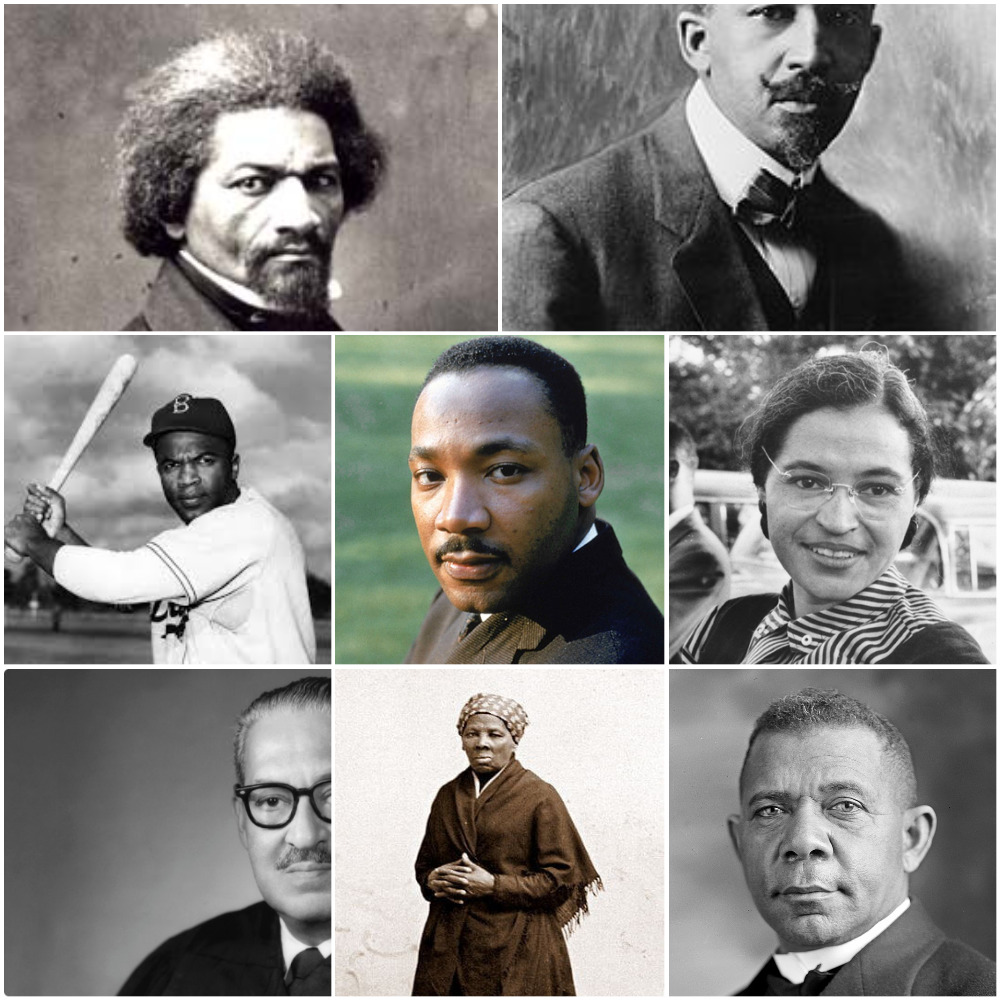
Only this explains why Douglass was never the obvious choice when it came to honoring the first black American with, among other things, a
- monument on the National Mall (Martin Luther King Jr. (MLK))
- national holiday (MLK)
- picture on any dollar bill (Harriet Tubman and Sojourner Truth being considered)
- picture on a postage stamp (Booker T. Washington)
And don’t get me started on the new National Museum of African American History and Culture choosing the life and times of Oprah Winfrey for its first special exhibition. I decried the museum’s myopic and craven choice, as well as Oprah’s self-adulating and self-indulgent acceptance of it.
No wonder, then, that TIME did not include Douglass on its definitive list of “The 100 Most Significant Figures in History,” which it published in 2013. The top five, in order, were Jesus, Napoleon, Muhammad, William Shakespeare, and Abraham Lincoln. But the list also included such notable Americans as George W. Bush (#36), Joseph Smith (#55), and Grover Cleveland (#98).
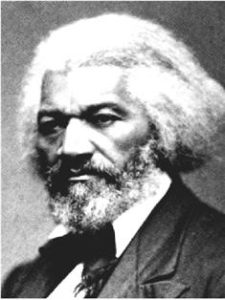
Of course, MLK is often hailed as the greatest (black) figure America has ever produced. But I made the case for Douglass over MLK point by point back in 2006:
Douglass was born into slavery and taught himself to read while MLK was born free and Morehouse-educated; Douglass had no peer while MLK had Malcolm X pulling the movement toward armed self-defense; and Douglass lived to 77, building a career as statesman and suffragist, while MLK died at 39 with his life’s work still unfinished.
Alas, I cannot help Douglass get the recognition (and honors) he deserves. I just don’t have the political or literary influence.
Which brings me to Adam Gopnik and his essay in the October 15, 2018 issue of The New Yorker. It’s titled “The Prophetic Pragmatism of Frederick Douglass” and has this defining and intriguing subtitle:
He escaped from slavery, and helped rescue America.
 As I read it, I felt like I did when I was in grade school and my big brothers were fending off schoolyard bullies for me. As a critically acclaimed novelist, reporter, lecturer and social critic, Gopnik has the kind of influence I lack. He has always struck me as a more sober, less acerbic Christopher Hitchens…
In any event, I strongly recommend you read and share his essay. Because the more you do, the more likely Douglass will get his due.
As it happens, Gopnik ended his essay by juxtaposing Douglass’s biography with that of no less a person than Abraham Lincoln. In doing so, he mirrored the juxtaposition of Douglass and MLK’s I cited above.
Here’s a little Gopnik teaser:
Lincoln remains the saint of American democracy, yet his ascent from the backwoods to the White House was, for all its rigors, a far easier ride. …
In his legacy as prophetic radical and political pragmatist, in the almost unimaginable bravery of his early journey and the resilience of his later career, in his achievements as a writer, activist, crusader, intellectual, father, and man, the claim that [Douglass] was the greatest figure that America has ever produced seems hard to challenge.
There’s no denying that Gopnik’s essay amounts to an authoritative vindication of my assertion. Accordingly, I rest my case.
Hail, Douglass!
Legacy Note: With over 5,600 posts spanning 20 years, I am easily the most prolific blogger on the most eclectic array of topics on the web. That makes The iPINIONS Journal an unparalleled archive of informed political and cultural commentary. Visit the ARCHIVES section in the sidebar or search by topic. You won’t find a more consistent, independent voice on world affairs.