India and Pakistan have been fighting over Kashmir ever since the British partitioned India in 1947. In fact, not since the Peloponnesian Wars has one divided nation fought so many wars to so little effect.
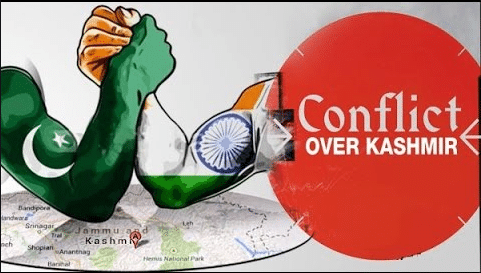 To be fair, each side insists it has only ever engaged in defensive cross-border skirmishes. And nothing lends more credence to that claim than the Damoclean sword of Mutually Assured Destruction (MAD), which hangs perpetually over these two nuclear powers.
This helps explain why, even after blaming Pakistan for orchestrating the 9/11-style attacks in Mumbai, India responded with little more than rhetorical fusillades. Here’s how iPINIONS framed it at the time in “Terror in Mumbai,” December 8, 2008:
Despite India’s incendiary accusations and Pakistan’s emphatic denials, I was confident even then that this tragedy would not trigger open warfare. India and Pakistan will continue their Damoclean coexistence for the same reason the United States and Russia do: No matter how heated the rhetoric or how deadly the skirmish, the threat of nuclear weapons deters them from escalating to the point of Mutually Assured Destruction (MAD).
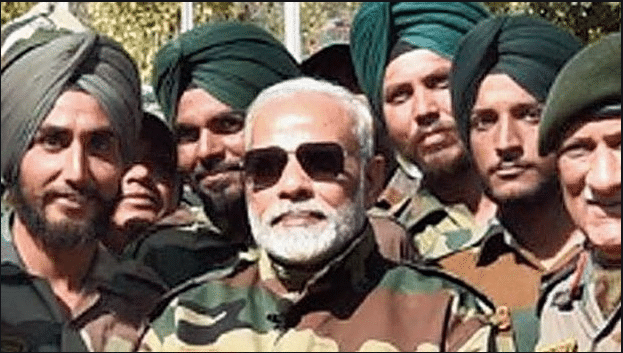 Accordingly, India can be forgiven for expecting nothing more than rhetorical fusillades from Pakistan in response to this decisive political strike:
The Indian government’s decision to revoke the semiautonomous status of Kashmir, accompanied by a huge security clampdown, is dangerous and wrong. …
The government claimed it was acting to prevent a planned terrorist attack. But Prime Minister Narendra Modi and his governing Bharatiya Janata Party, deeply rooted in Hindu nationalist ideology, have long made no secret of their intention to revoke the articles in the Indian Constitution granting the predominantly Muslim Kashmir a special status — a move the B.J.P. sees as ‘correcting a historical blunder.’
(The New York Times, August 5, 2019)
Mind you, far from preventing terrorist attacks, this unilateral move is bound to provoke them, especially from Kashmiri separatists who have been cursing both India and Pakistan for decades. iPINIONS alluded to their restiveness in “Crimea: One of Many ‘Distinct’ Nations Within Nations Yearning to Break Away,” March 31, 2014, and again in “Catalonia Dreamin’,” May 17, 2018, regarding separatists elsewhere.
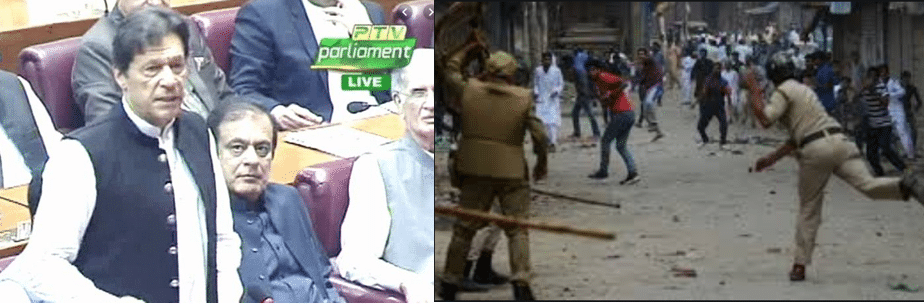
Frankly, if you’ll forgive the analogy, India is willfully inviting “the troubles” Britain endured while trying to assert dominion over Northern Ireland. Still, India clearly believes it can contain the incendiary aspirations of Kashmiri separatists. In that sense, it may be hoping to emulate the way Russia annexed Crimea.
More to the point, Pakistan clearly has no interest in fighting a full-scale war over Kashmir. Nothing betrays this quite like Prime Minister Imran Khan threatening to “report” India to the United Nations. After all, both countries have long defied a litany of UN resolutions with impunity. The most Pakistan can or will do unilaterally is launch pro-forma diplomatic strikes.
For its part, India is probably more concerned about China. It often surprises people to learn that China controls its own slice of this disputed territory: 15 percent, compared to Pakistan’s 30 and India’s 55. What’s more, China is playing superpower patron to Pakistan, countering the role the United States is playing for India. This is just one of many fronts in the new Cold War brewing between China and the US.
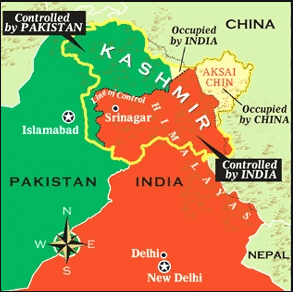
Despite all that, I suspect India struck now because both China and the United States are too preoccupied with their own hot potatoes to care much about Kashmir:
- China is busy asserting dominion over Hong Kong, while also running Orwellian re-education camps to crush the autonomous aspirations of its Uyghur Muslim population.
- The United States is juggling nuclear brinkmanship not just with North Korea, but with Iran, too.
- Both are locked in an escalating trade war, which makes their concern about Kashmir seem about as serious as an elephant worrying about a flea flopping onto its backside.
In any case, India has clearly calculated that it has nothing to fear by striking this political blow. Ironically, it might even be giving China cover to do in Hong Kong what it’s now doing in Kashmir. Except that, haunted by the ghost of Tiananmen Square, China knows it has far more to fear than fear itself.
Incidentally, the Indian subcontinent is often dubbed “the most dangerous place in the world.” But these days, you’re probably safer there than in the United States, given the epidemic of mass shootings plaguing America.
That said, am I the only one who wonders why, at the time of partition, Kashmir’s Muslim majority opted to accept Hindu-majority India as its overlord instead of joining Muslim-majority Pakistan?
Things that make you go, hmmm.
Related commentaries:
Mumbai…
Catalonia…
Crimea…
Hong Kong…
North Korea…
Tiananmen Square…

Legacy Note: With over 5,600 posts spanning 20 years, I am easily the most prolific blogger on the most eclectic array of topics on the web. That makes The iPINIONS Journal an unparalleled archive of informed political and cultural commentary. Visit the ARCHIVES section in the sidebar or search by topic. You won’t find a more consistent, independent voice on world affairs.